
Can AI Write Real Estate Listings Safely? What Australian Agents Need to Know
AI tools are increasingly used to write property listings, but can they create legal risk? Learn how Australian real estate agents can safely use AI while complying with ACL Section 18.
3/20/20262 min read

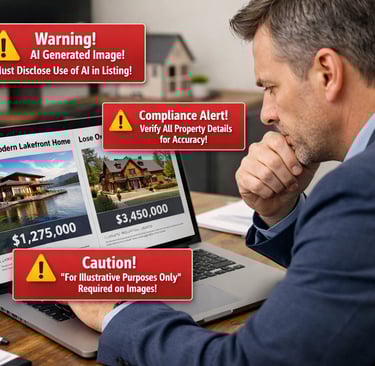
Artificial intelligence is quickly becoming part of everyday real estate marketing. Many agents now use AI tools to help draft listing descriptions, marketing copy, and social media content.
These tools can dramatically speed up the process of preparing property listings. However, an important question is beginning to emerge across the industry:
Can AI write real estate listings safely?
The answer is that AI can be extremely helpful, but it also introduces compliance risks that agents need to understand.
Why Agents Are Using AI for Property Listings
AI writing tools can quickly generate listing descriptions based on a few property details such as:
number of bedrooms
location
property features
lifestyle benefits
Within seconds, agents can receive multiple versions of a listing description that would normally take much longer to write manually.
For busy agencies, this can significantly improve productivity and consistency in property marketing.
However, AI-generated content is designed to be persuasive and engaging, which means it may sometimes produce language that goes beyond factual descriptions.
The Compliance Risk of AI-Generated Listings
In Australia, property advertising must comply with Australian Consumer Law (ACL).
Under ACL Section 18, businesses must not engage in conduct that is misleading or deceptive, or likely to mislead or deceive.
This applies directly to real estate listings and advertising.
When AI tools generate listing descriptions automatically, they may include phrases such as:
“perfect family home”
“luxury living at its finest”
“rare opportunity”
“unmatched lifestyle”
While these phrases are common in marketing language, they may create risk if they imply claims that cannot be supported by facts about the property.
Even if the wording was generated by artificial intelligence, the legal responsibility for the advertisement still rests with the real estate agency publishing the listing.
Why AI Should Be Treated as a Drafting Tool
The safest way for agents to use AI is to treat it as a drafting assistant, not a final publishing tool.
AI can help generate a starting point for listing descriptions, but the final content should always be reviewed by the agent before publication.
A simple review process can help identify language that might:
exaggerate property features
imply guarantees
create unrealistic expectations for buyers
This review step allows agents to benefit from the speed of AI while still maintaining control over the final advertisement.
Introducing a Compliance Review Step
As AI becomes more common in property marketing, many agencies are beginning to introduce a structured review process before listings are published.
This workflow typically includes:
Generating the listing description
Reviewing the content for potential compliance risks
Confirming the final wording before publication
Saving a record of the review process
By introducing this type of workflow, agencies can demonstrate that they have taken reasonable steps to ensure advertising accuracy.
The Future of AI in Real Estate Marketing
Artificial intelligence will continue to play a growing role in the real estate industry.
Used correctly, it can help agents save time and produce high-quality marketing materials more efficiently.
However, AI should always be used responsibly, particularly when it comes to property advertising that may influence buyer decisions.
Combining AI tools with proper review processes allows agencies to adopt new technology while still maintaining compliance with Australian Consumer Law.
Final Thoughts
AI can be a valuable tool for generating property listing descriptions, but it should never replace professional judgment.
By reviewing AI-generated content carefully and introducing a compliance workflow before publication, real estate agencies can reduce risk while still benefiting from the efficiency that AI provides.
As technology continues to evolve, responsible use of AI will become an increasingly important part of real estate marketing.
Check a listing free- https://safelisting.au
Contact
Safe Listing AU
Helping real estate agencies publish compliant property listings with confidence.
Built for Australian advertising standards. No lock-ins. Cancel anytime.
Phone
info@safelisting.au
Disclaimer
© 2025. Safe Listing AU All rights reserved.
Safe Listing AU provides automated assistance to help identify potential errors or compliance risks in property listings. It does not provide legal advice. Users remain responsible for ensuring compliance with applicable laws and regulations.
0418667741
Terms of service
Privacy Policy